About Boba
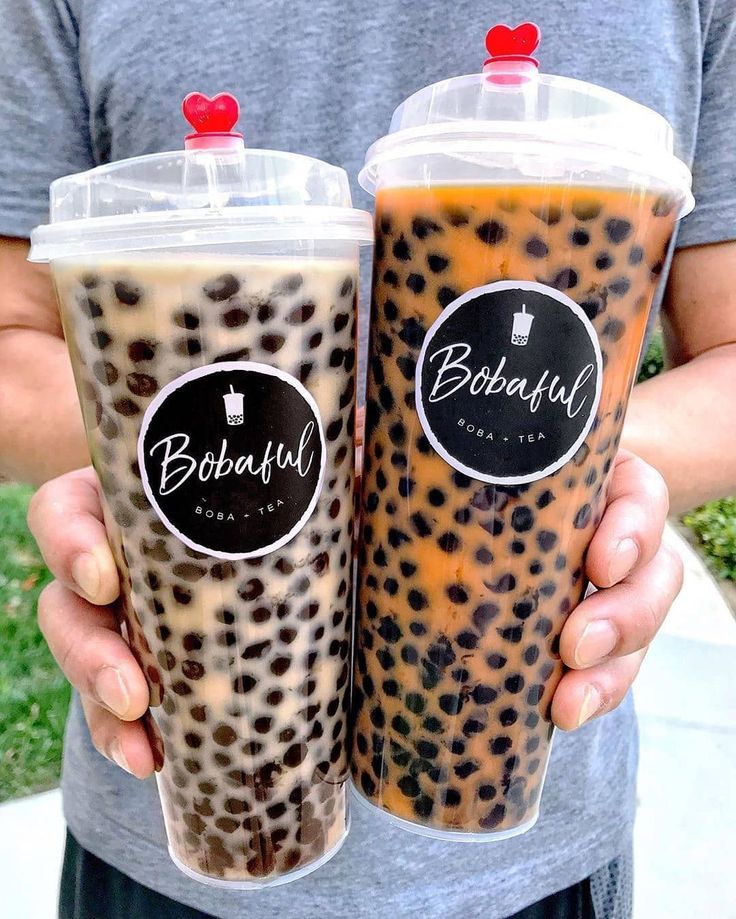
When someone says ‘Boba tea’, they are referencing a traditionally cold-served beverage that has a tea base, a milk or fruit flavor, and edible pearls (the ‘boba’ in boba tea) inside a cup.
Boba Tea
Boba tea has many aliases which tends to confuse the heck out of people. You may have heard one or many of these phrases used, but you should know they all mean the same thing: bubble tea, pearl tea, bubble milk tea, boba, boba fruit tea or tapioca tea.
About Boba Tea
Bubble tea starts with a tea base that's combined with milk or fruit flavoring and then poured over dark pearls. The gluten-free pearls—the boba—are made of tapioca starch, which is then combined in an industrial mixer "with brown sugar syrup, water, potassium sorbate and guar gum, to produce a damp, caramel-colored powder," according to the New York Times. The result is a mostly flavorless, chewy black bubble.
Boba shops 2
Boba shops have now bloomed all over America and are no longer limited to the Taiwanese enclaves they once resided in 15 years ago. For those who haven’t had the chance to experience the magic that is boba, and find themselves staring, perplexed, at the overwhelming menu full of customizable options, we are here to guide you.
What Boba is made of 2
they’re cassava starch balls. The longer answer: the term boba can, holistically, be in reference to the entire drink-plus-toppings, the most popular topping being tapioca pearls (which also happen to be called boba—I know, it’s confusing, but stay with me!). The drink as a whole is also known as bubble tea, pearl tea, and tapioca tea—depending on what part of the country you’re from. As stated earlier, the tapioca pearls that are also called “boba” are generally made from cassava starch, a root vegetable from South America that is also referred to as yuca.
The beginning of Boba
Since its beginnings, the basic tapioca iced tea recipe has evolved into an entire genre of drinks. Milks can range from whole and skim to nondairy substitutes like almond and coconut — or often there’s no milk (or milk-like product) at all, as in the case of cold tea-infused or juice-based drinks. The pearls can be fat as marbles, small as peas, square-shaped, red, or even crystal clear. There are now more than 21,000 boba shops in Taiwan, with thousands more around the world — many belonging to successful international chains like CoCo Fresh Tea & Juice (都可), Gong Cha, and Sharetea. And while the term was once confined to tea shops, you’ll find throughout Taiwan that the boba trend is now being incorporated into desserts, sandwiches, cocktails, and even skincare. Wherever you are here, if you dig deep enough, you’ll eventually strike boba.